Valentine N. O. Igbobi
5 min read
Valentine N. O. Igbobi
5 min read
THE GREAT 12: The Twelve Men Who Planted the Tree That Became Peoples Club in the Diaspora.
Every great institution has an origin story. The Peoples Club movement in the Diaspora did not begin with a grand blueprint, a strategic master plan, or a vision of continental expansion. It began with friendship. In 1987, twelve friends in Houston, Texas—men of shared values, common purpose, and mutual respect—came together seeking something simple: a place where mature adults could enjoy meaningful fellowship on weekends, away from the distractions of nightclubs.
I call them “THE GREAT 12.”
Among them were Ifeanyi O. Aguocha, Young Emeka Ahamba, Elias Onwudiegwu, Innocent Aluka, Emmanuel O. J. Nnabuihe, Uchegbulem Aloysius Eze, Hyacinth Onyekanne, Maxwell Uzoegwu, Amos Ozurumba, Callistus Anyama, and other distinguished pioneers who formed the nucleus of the group.
At first, they gathered beneath a tree, exchanging ideas and discussing life. Those conversations eventually moved into their homes and later to Ifeanyi Aguocha’s office, where they began deliberating on the type of association they wished to establish—one that reflected their values and maintained a meaningful connection to Nigeria.
They were all professionals. They were mature adults. Most were married with families. There were no undergraduates, no adventurers seeking excitement—only accomplished individuals determined to build something respectable, enduring, and worthy of emulation.
One member, Hyacinth Onyekanne, provided the critical link. His father-in-law was then Chairman of the Owerri Branch of the People’s Club of Nigeria. Through that connection, the group became acquainted with the People’s Club and concluded that its philosophy aligned perfectly with their aspirations.
Their objective was clear: to establish a club of responsible adults that would command respect, strengthen bonds among Nigerians abroad, and demonstrate that the Diaspora could sustain and expand the Peoples Club’s ideals.
Thus, the Houston Branch was born.
The founding members were inducted in Owerri in 1988. Although the branch was scheduled to be inaugurated in 1989, the then-President, Chief Dr. C. N. Obioha, was unable to attend due to prior commitments. Patron F. F. B. C. Nwankwo conducted the initial inauguration, while the late President Eddie Igwa later formally regularized the process in what became famously known as “Regularizing the Irregularities” in November 1990.
No one imagined that the movement would one day spread across North America.
Yet the founders persevered through leadership challenges, cultural differences, and growing pains. Abandonment was never an option. Their commitment was fueled by friendship, sacrifice, and an unwavering belief in the vision.
Those sacrifices were substantial. The pioneers spent personal funds to support visiting dignitaries and prospective members. They provided transportation, shopping assistance, hospital visits, accommodations, and hospitality. During the first convention in Houston in 2003, some members personally financed the participation of more than twenty-one visitors from Nigeria.
They invested not because they expected rewards, but because they believed in the future they were building.
The branch’s founding chairman was Ifeanyi O. Aguocha, who served from 1988 to 1994 and laid the foundation for the club’s growth. He was succeeded by Young Emeka Ahamba, who served from 1994 to 2000.
Under Chairman Ahamba’s leadership, the movement expanded significantly with the inauguration of branches in Washington, D.C., Miami, and Princeton.
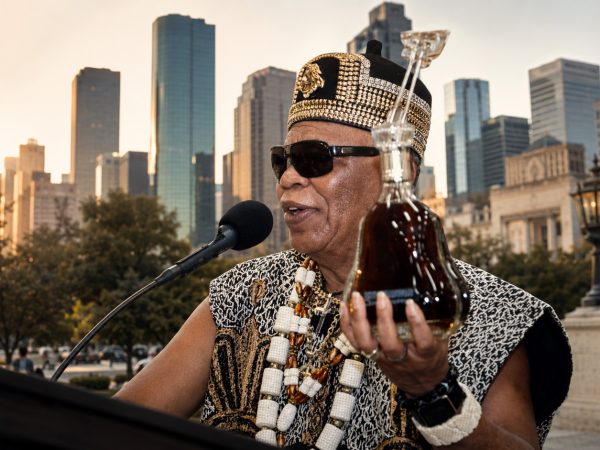
In 2000, Uchegbulem Aloysius Eze assumed the chairmanship and served two consecutive terms until 2006. Having previously served as the branch’s founding Public Relations Officer and First Vice Chairman, he brought experience, vision, and relentless dedication to the office.
“I was always willing to help grow the club. I was the image maker—the PRO. I never wanted anyone to be disrespected.”
— Uchegbulem Aloysius Eze
A tireless advocate for growth, he worked diligently to protect members’ dignity and promote the club’s image. Under his administration, the Dallas, Philadelphia, and Boston branches were inaugurated.
It was also during his tenure that the Houston Branch acquired its twelve-acre property and began construction of its clubhouse without a single bank loan.
Another historic milestone was achieved in 2003 when Houston hosted the first People’s Club convention in the Diaspora, establishing a precedent that continues to this day.
In recognition of his extraordinary service and leadership, Uchegbulem Aloysius Eze became the first International Patron of Peoples Club outside Nigeria in 2009—a distinction that underscored both his contributions and the growing importance of the Diaspora movement.
Today, he remains the only member of The Great 12 still actively participating in Progressive Worldwide.
For a man whose fingerprints are etched across the history of Peoples Club in the Diaspora, a standing ovation is not merely appropriate—it is deserved.
Looking back, the story of The Great 12 is not merely the story of a branch. It is the story of vision, sacrifice, friendship, and perseverance.
What began as weekend conversations among friends became the foundation of a movement that reshaped Peoples Club beyond Nigeria’s shores.
History often remembers institutions. It should never forget the men who built them.
Next:
(3 of 3) Part Series.
Only on OBN, the Network of Choice